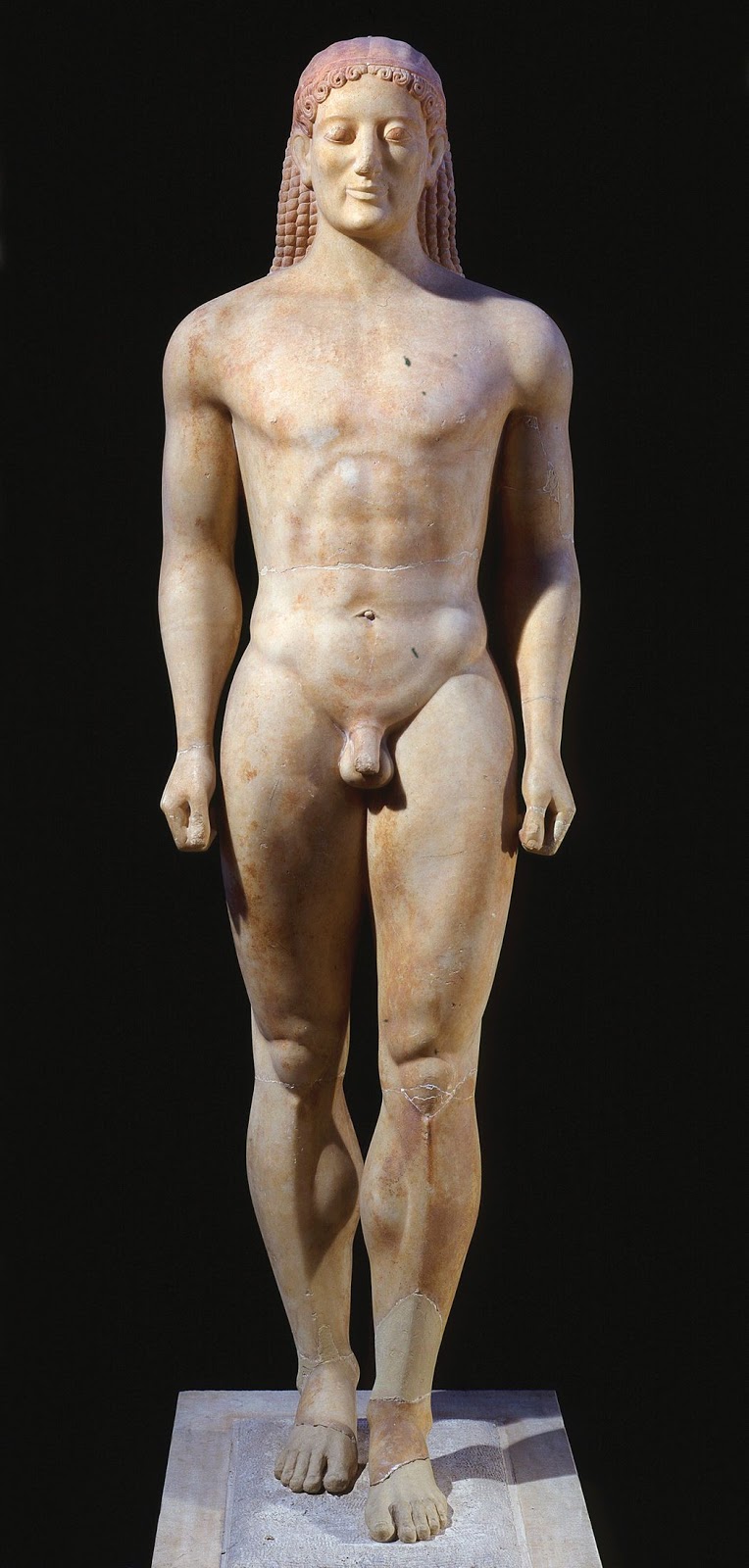
A Greek statue of a youth or a standing nude male youth, of the Archaic period. The large stone figures began to appear in Greece about 615–590 bc. They were funerary markers or dedications in sanctuaries. They were usually larger than life size, made of marble, bronze, or alabaster, and were sometimes painted. The kouros is thought to have been influenced by Egyptian sculpture; the first appearance of such monumental stone figures seems to coincide with the reopening of Greek trade with Egypt in c. 672 bc. The kouros remained a popular form of sculpture until about 460 bc. The female equivalent is called a kore.
sculpture etiketine sahip kayıtlar gösteriliyor. Tüm kayıtları göster
16 Nisan 2020 Perşembe
WHAT IS THE KORE?
A type of freestanding statue of a maiden – the female counterpart of the kouros or standing youth – that appeared with the beginning of Greek monumental sculpture in about 660 bc and remained to the end of the Archaic period in about 500 bc. It evolved from a highly stylized form to a more naturalistic one. The statue was usually draped, carved from marble, and painted in its original form. They are often dedications in sanctuaries and some are found in funeral contexts. Important series were in the temple of Hera on Samos and on the Acropolis in Athens.
Kaydol:
Kayıtlar (Atom)

